

TMS vs. Antidepressant Medications: How Does TMS Compare?
If you are struggling with depression, anxiety, OCD, PTSD, or another mood disorder, you may feel frustrated by treatments that have not provided the relief you needed. While antidepressant medications remain one of the most common treatment options, they are not the right fit for everyone. Some individuals experience unwanted side effects, while others find that their symptoms persist despite months or years of trying multiple medications.
Transcranial Magnetic Stimulation (TMS) offers a different approach. While unfamiliar to most, TMS is an FDA-approved, non-invasive treatment that uses targeted magnetic pulses to stimulate specific areas of the brain associated with mood regulation. Unlike antidepressants, TMS is not a medication and is not associated with many of the systemic side effects commonly linked to antidepressant use.
Understanding how TMS compares to antidepressant medications can help you make a more informed decision about your mental health treatment options.
What Is TMS Therapy?
Transcranial Magnetic Stimulation (TMS) is a non-invasive procedure that uses an electromagnetic coil placed against the scalp to deliver magnetic pulses to targeted areas of the brain. These magnetic pulses stimulate nerve cells involved in mood regulation and emotional processing.
TMS treatments are short sessions performed in our outpatient clinical setting, require no anesthesia, and allow patients to return to normal daily activities immediately after each session. Treatment sessions last less than an hour, making TMS a convenient option for many individuals seeking relief from mood disorders.
TMS has been approved by the FDA for the treatment of major depressive disorder and has also shown benefits for individuals experiencing anxiety, obsessive-compulsive disorder (OCD), post-traumatic stress disorder (PTSD), and other mood-related conditions.

TMS Side Effects vs. Antidepressant Side Effects
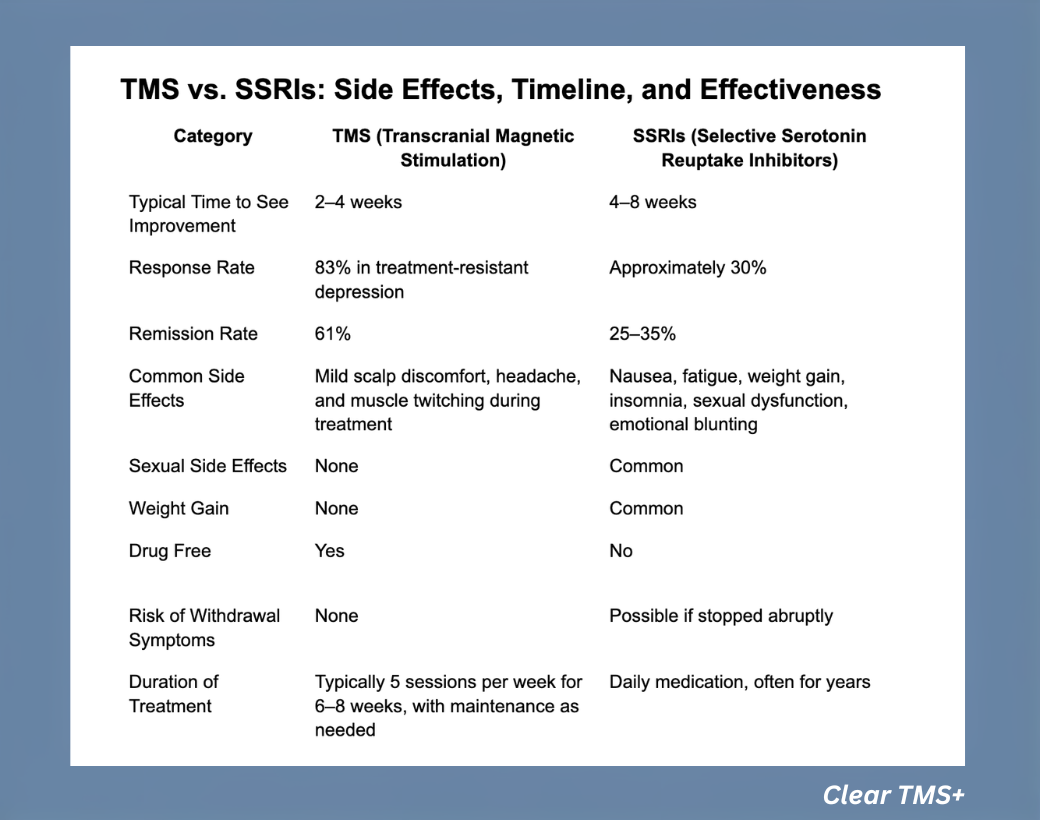
One of the most significant differences between TMS and antidepressant medications is the side effects. Because TMS targets specific areas of the brain without introducing medication into the body, it is associated with fewer overall side effects than antidepressant medications. Most patients tolerate treatment well, and many experience no side effects at all.
TMS Side Effects
When side effects do occur, they are typically mild and temporary. The most commonly reported side effects of TMS include:
Mild scalp discomfort
Tingling sensations
Headaches
Facial muscle twitching during treatment
Lightheadedness
These effects often improve as treatment progresses and usually resolve shortly after each session.
In contrast, antidepressants such as selective serotonin reuptake inhibitors (SSRIs) affect neurotransmitter activity throughout the body. While SSRIs are effective for many individuals, they can often produce side effects that impact daily life.
SSRI Medication Side Effects
Common SSRI side effects include:
Nausea
Fatigue
Sleep disturbances
Weight gain
Sexual problems
Dry mouth
Emotional blunting and numbness
Dizziness
Withdrawal symptoms if medication is stopped abruptly or taken inconsistently
While many people benefit from antidepressants, others find the side effects difficult to tolerate or do not experience adequate symptom improvement.
Comparing TMS and SSRI Treatments
Is TMS Better Than Antidepressants?
There is no single treatment that works best for everyone. Antidepressants have helped millions of people manage depression and other mood disorders, and they continue to be an effective first-line treatment for many patients.
However, some individuals do not achieve the results they need from medication alone. Others may experience side effects that interfere with their quality of life. For these patients, TMS offers a medication-free alternative that has helped many people achieve meaningful symptom relief.
The best treatment choice depends on your individual circumstances, symptoms, medical history, and treatment goals. Working with our mental health providers can help you determine which option is most likely to support your long-term wellness.

Who Is a Good Candidate for TMS?
TMS is often recommended for individuals who have been diagnosed with depression and have not experienced sufficient improvement from antidepressant medications. It may also be a suitable option for people who:
Have experienced significant medication side effects
Prefer a non-drug treatment approach
Have tried multiple antidepressants without success
Are looking for an alternative treatment for treatment-resistant depression
A comprehensive evaluation can help determine whether TMS is an appropriate treatment option based on your symptoms, treatment history, and overall health. TMS is often covered by health insurance for people who have already tried several antidepressants.
Learn More About TMS Treatment with Clear TMS+
If you have been struggling with depression, anxiety, OCD, PTSD, or another mood disorder and have not found relief through traditional treatments, TMS may be worth exploring.
This FDA-approved therapy has helped many individuals regain control of their mental health without the ongoing challenges associated with medication side effects.
Schedule a consultation with us at Clear TMS+ to learn whether TMS could be the right treatment option for you.
Reach out today to start your journey toward mental wellness.
References:
Sackeim, H. A., Aaronson, S. T., Carpenter, L. L., Hutton, T. M., Mina, M., Pages, K., Verdoliva, S., & West, W. S. (2020). Clinical outcomes in a large registry of patients with major depressive disorder treated with transcranial magnetic stimulation. Journal of Affective Disorders, 277, 65–74. https://doi.org/10.1016/j.jad.2020.08.005
